The core of modern brand success in the fast-paced corporate world is digital marketing. As traditional marketing becomes less relevant in the current economy, businesses of all types are investing more in digital methods to reach, engage, and convert their online consumers. My strategy and content creation work have earned me recognition over the course of my many working years in this field. During that time, I have seen how digital marketing has evolved from a supplementary tool to a crucial business driver.
I’ll describe digital marketing in 2025 in this post, outline the key tactics that companies need to use, and examine the trends influencing its development.
What Is Digital Marketing?
Digital marketing is the part of marketing that promotes goods and services using the Internet and online-based digital devices, including smartphones, desktop computers, and other digital media and platforms.
Core Pillars of Digital Marketing
To properly comprehend the scope of digital marketing in 2025, it is important to divide it into its primary pillars:
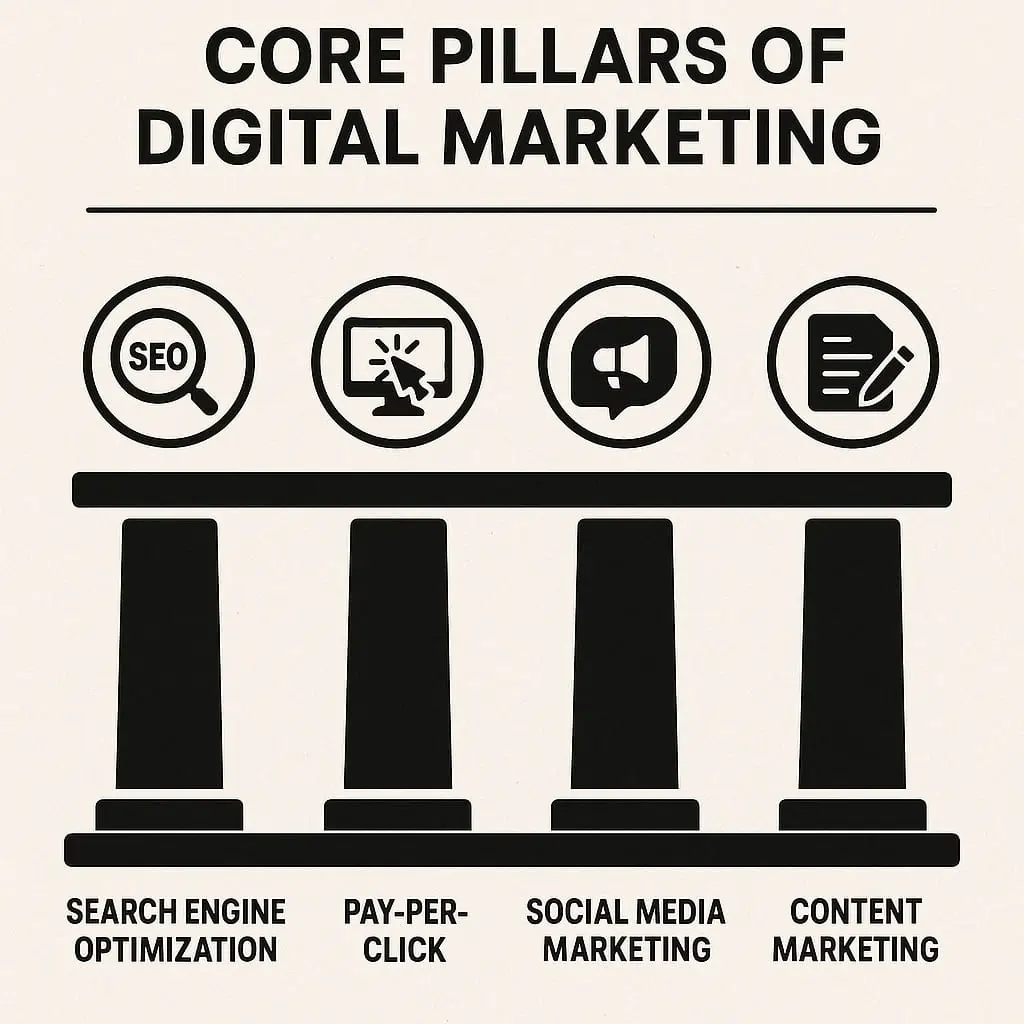
Search Engine Optimization (SEO)
The cornerstone of every online presence is SEO. The technique of increasing the quantity and quality of internet traffic that search engines provide to a website or web page is known as search engine optimisation, or SEO. SEO focuses on unpaid search traffic, sometimes known as “organic” results, as opposed to sponsored, social media, direct, or referral traffic.
SEO includes:
- On-page optimization (keyword usage, meta tags, headings)
- Off-page optimization (backlink building, guest posting)
- Technical SEO (site speed, mobile-friendliness, crawlability)
Content Marketing
The proverb “content is king” still applies in today’s environment. High-quality content informs the audience, builds trust, and produces income. A good content strategy makes use of white papers, blog posts, infographics, videos, and more.
Content marketing is an effective technique to increase brand recognition, equity and client trust. Once trust is created, buyers are more likely to engage with product- and feature-specific information such as demonstrations, reviews, and brochures.
High-tech purchasers may effectively promote themselves when they have a robust content marketing department. Sales representatives then take on a more consultative role, assisting potential clients in working through complex use cases and product concerns.
Social Media Marketing
Using social media platforms to create social networks and exchange information in order to boost a business’s reputation, boost sales, and improve website traffic is known as social media marketing. Apart from offering businesses a means of connecting with current clients and attracting new ones, social media marketing (SMM) features built-in data analytics that enable marketers to monitor the effectiveness of their campaigns and discover additional methods to interact.
- LinkedIn: B2B thought leadership
- TikTok: short-form, engaging content
- Facebook: community building, retargeting
Email Marketing
Sending a commercial message via email, usually to a group of individuals, is known as email marketing. Any email sent to a present or potential consumer might be categorised as email marketing in its widest definition. It includes sending emails to advertise, seek business, or request donations or sales.
Pay-Per-Click (PPC) Advertising
PPC enables advertisers to purchase presence on social media and search engines. Google Ads and Meta Ads are the most often utilized technologies. A well-designed campaign may provide results straight away with the correct targeting.
Retargeting ads, retail ads, and video ads are typical formats in this strategy. In 2025, PPC accuracy and return on investment will be improved by sophisticated automation and AI-driven bidding in digital marketing.
Analytics and Conversion Rate Optimization (CRO)
By raising the proportion of visitors who complete a desired activity, such as making a purchase or registering, conversion rate optimisation, or CRO, increases a website’s efficacy. An effective CRO uses strategies including behavioural analysis, A/B testing, and user experience improvements to boost conversion rates. Visitors who do not instantly enter your conversion funnel are less likely to return and take action since internet traffic might fluctuate. Therefore, you must perform successful CRO efforts to increase your chances of generating conversions.
The Power of Personalisation
Consumers of today demand customization. A follow-up email after viewing a website or a product recommendation on Amazon is an example of a personalized experience that increases engagement and loyalty.
Marketers can now automate interactions based on geography, activity, and preferences and segment people more thoroughly thanks to AI and machine learning. The return on investment for brands that use customization is much higher. This makes digital marketing in 2025 increasingly focused on tailoring every touchpoint.
New Developments Affecting 2025 Digital Marketing
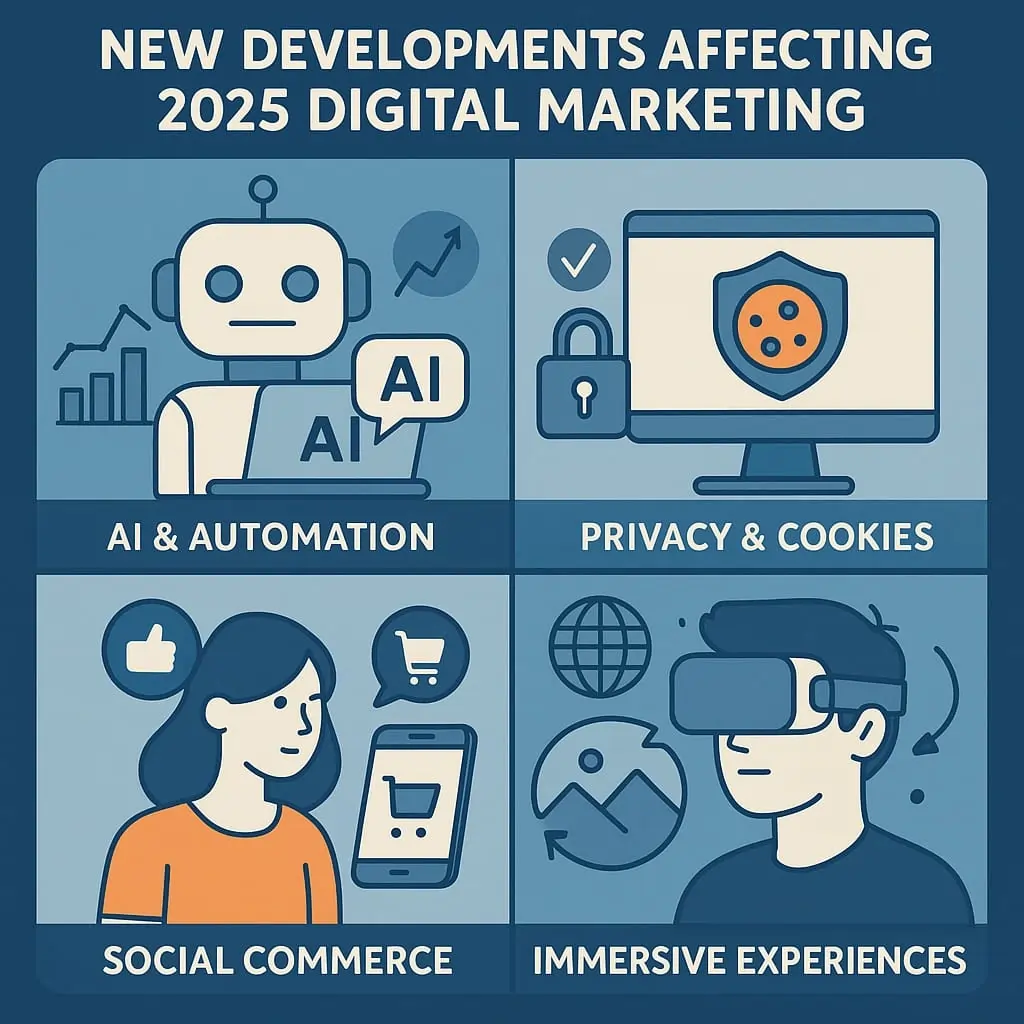
1. Visual and Audio Search
Voice and visual search are driving the rapid evolution of digital marketing in 2025. The days of only using text-based searches are long gone. Users are now searching in ways that were unthinkable ten years ago thanks to technologies like Google Lens and voice assistants like Alexa and Google Assistant.
Similarly, users may search using photographs with visual search tools like Google Lens. Through the optimisation of product images and metadata, this trend is particularly advantageous for retail, fashion, and home décor firms.
2. AI-Powered Personalisation
AI customisation makes use of a customer’s demographic data, past browsing and purchase history, and social media interactions to comprehend their particular needs and preferences. What they would be interested in, where they would like to interact with your company, and the next best customer touchpoint in their ideal buying experience can all be predicted by the technology using this knowledge.
Among the examples are:
- Suggestions for products
- Astute email content
- Personalisation of dynamic websites
- Mapping the customer journey
Digital marketing in 2025 thrives on these intelligent systems to deliver one-to-one marketing at scale.
3. Purpose-driven Branding and Sustainability
What your brand stands for is important to modern customers. Particularly with Gen Z and Millennials, campaigns that are connected to social concerns, environmentally aware initiatives, and open corporate practices strike a strong chord.
These days, digital marketing in 2025 has a function in addition to being a tool for promotion.
In conclusion, the digital frontier is waiting.
Digital marketing in 2025 will present both possibilities and challenges. Change is accelerating, markets are getting more competitive, and customer expectations are rising. However, with the right mentality and resources, a business may prosper. Make an effort to develop genuine relationships. Value should be continuously delivered. Maintain your hunger for knowledge. In the future, digital marketing will strive to be relevant rather than just apparent.
With the expanding powers of AI, automation, and analytics, marketers must keep the human aspect at the centre of everything. Every click is made by an actual individual with genuine intentions. Rather than simply reaching out, invest in relationships. In this age of attention overload, true interaction will always outperform showy approaches. Brands that seek to connect rather than convert will be the most successful.